How to bodyboard: the beginner's guide
Bodyboarding means riding a wave lying on a short board, propelled by fins. Your first wave often comes in the very first session. This guide covers what we explain to beginners who come into the shop: the gear you really need, how to choose your spot and conditions, the position on the board, kicking, getting through the waves and reading the ocean, all the way to your first green wave. Then the mistakes that cost you weeks and the safety rules we do not compromise on.
Is bodyboarding easy to learn?
Yes, more so than surfing, and that is its great strength. There is no take-off to pull off: you stay lying down, the centre of gravity is right at water level, the board floats and forgives. With fins, you also have a kicking speed that no beginner surfer has when paddling. The result: most beginners are gliding on whitewater within the first quarter of an hour and catching a real unbroken wave within their first few sessions.
What takes time is not gliding, it is reading the ocean: knowing where to sit, which wave to go for, when to kick. That is what this guide focuses on, because it is what separates the rider who catches three waves a session from the one who catches thirty.
The gear you need to start bodyboarding
Four pieces of kit are enough. A board that fits you: standing up, with the board held vertically in front of you, it should come up to somewhere between your navel and the bottom of your sternum. Too big, it is heavy to manoeuvre; too small, it lacks lift and you stall as you try to catch the wave. For a first purchase, a PE (polyethylene) core is the right choice: soft and forgiving, it tolerates positioning mistakes and holds up well in the temperate water of the Atlantic.
Fins as soon as you want unbroken waves: you catch them with your legs, not your arms. A bodyboard leash on the wrist or bicep, so you are not swimming after your board every time you wipe out. A wetsuit or a rash vest depending on the season, as much against the cold as against the deck chafing your stomach. Add a bodyboard bag to carry the board and protect it from the sun between sessions.
- Board: between navel and sternum, PE core to start with
- Fins: short and stiff, snug-fitting, with fin leashes
- Leash: wrist to start with, bicep once the waves get bigger
- 3/2 wetsuit from May to October in the Atlantic, 4/3 the rest of the year
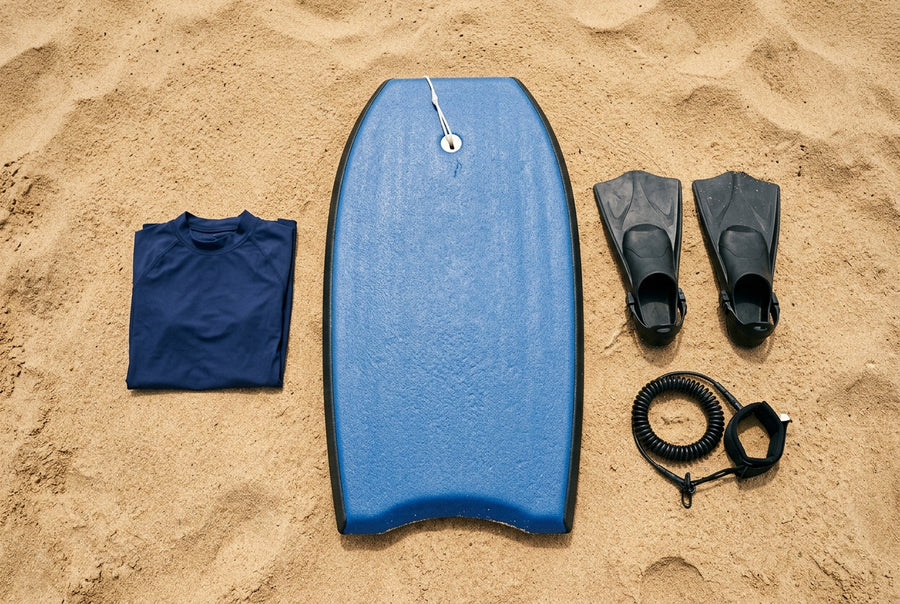
All the board criteria are in the guide to choosing your bodyboard, the tables by build in the size guide, and fin selection in the fins guide. The calculator below gives you your size range straight away.
What size bodyboard to start with?
Weight, height and level: the range we would give you over the counter, in inches and centimetres.
Choosing your spot and conditions
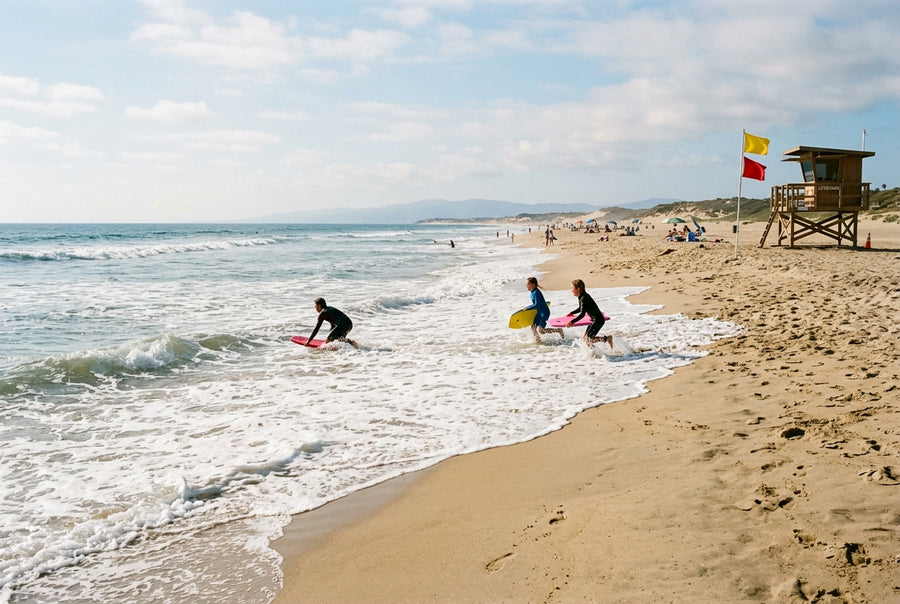
The right spot to start on is a lifeguarded sandy beach, with a bottom that slopes gently, whitewater of 30 cm to 1 m rolling in regularly, and no strong current. On the Landes beach breaks, look for the zone where the waves break well out from the shore in a regular line, not the places where the water is flat and dark between two areas of whitewater: that is where rip currents (baïnes) form, the currents that run back out to sea.
The best time? The morning, when the wind is light or blowing from the land (offshore wind) and the wave stays clean. On our beaches, the tide matters more than the time of day: around mid-tide, the sandbanks generally produce the most regular whitewater. Watch the beach for five minutes before getting in the water: where people are catching waves, where they are getting out, where nobody goes.
How to bodyboard: the 6 steps to your first wave
Warm up and gear up at the water's edge
Five minutes of mobility work for the shoulders, back and ankles, then gear up with your feet in the water: leash attached before going in, fins put on in 30 cm of water (on dry land you walk badly in them and damage them). Hold the board by the nose, horizontally, nose facing the waves.
Get through the whitewater to reach the take-off zone
While you can still touch the bottom, move forward walking sideways, board in front of you. When a wall of whitewater arrives, push the nose of the board under the water, pull it tight against you and dive under it, or jump over it if it is small. As soon as you are out of your depth, kick lying on the board, legs under the water, keeping a steady rhythm rather than violent strokes.
Position yourself correctly on the board
This is the foundation of everything. Your hips rest on the back of the board (the tail), your elbows rest on the rails, your hands hold the front corners, your chest is raised and your eyes are looking far ahead. The nose of the board should stay two or three centimetres above the water: pushed too deep, it brakes and digs in; too high, it skids. If the board rears up, move your body forward; if it dives, move back.
Read the wave and get into position
A wave is caught where it starts to break, not in the whitewater. Position yourself in front of the zone where the lip is falling, a few metres further out to sea. Turn towards the beach when the wave is still five or six metres behind you, and start kicking before it arrives: it is the speed you have built up that makes the difference between going and watching it pass.
Kick, then glide
Kick hard with your legs well under the water, one or two pushes on the rails with your arms, and as the wave lifts you, shift your weight towards the front of the board: it accelerates and tips over with the wave. As soon as you are gliding, lift your fins out of the water (they brake), raise your chest and let the wave carry you. On whitewater, that is already the whole move; on a green wave, the only thing missing is direction.
Ride the wave across and exit cleanly
To go right, press down on the right rail with your elbow and body weight, and push your right fin into the water like a skeg. The board heads across the wave, on the face, where it has speed. To exit, climb back up towards the lip and slip out behind the wave before it closes out, or let the whitewater carry you to the shore. Then you head back out, and do it again thirty times.
The classic beginner mistakes
They are always the same, and they are quickly corrected once you know them.
- Too far back on the board: the nose rears up, the board skids and does not go
- Too far forward: the nose dives into the whitewater and you go over the front
- Going in the whitewater rather than at the peak: you only glide on the end of the wave
- Kicking too late: with no speed, the wave passes underneath you
- Keeping your fins in the water once you are riding: they brake, lift them out
- A board that is too big "to grow into": heavy, impossible to push under the waves
- Staying in the water when tired: that is when wipeouts and positioning mistakes happen
Safety: rip currents (baïnes), currents and right of way
The ocean beaches of south-west France are powerful beach breaks, with rip currents (baïnes): hollows between the sandbanks that drain out to sea as the tide drops. If you get carried out, do not fight the current: kick across it, parallel to the beach, until you are back in the zone where the waves are breaking, and let them bring you in. A board floats: you never let go of it, it is your life jacket.
Choose a lifeguarded beach and stay within the marked bathing area. Respect right of way: whoever is closest to the point where the wave breaks has the wave, and you do not go on a wave someone is already riding. Finally, get out before you are exhausted, not after.
Progressing after your first waves
Short, frequent sessions are better than one long session a month: the body memorises positioning, the eye learns to read the sets. Watch the advanced riders from the beach, film yourself once, compare. Once you are catching green waves regularly, the moves come in order: bottom turn, cutback, 360, then el rollo. The guide to bodyboarding moves describes them one by one, with their prerequisites.
Kitting out a child? The size and safety guidelines are different: see bodyboarding for kids, how to choose the right board. And to keep going through winter, when the waves are at their best, everything is in the bodyboarding in winter guide.
Frequently asked questions from beginners
Is bodyboarding easier than surfing?
For getting started, yes, by a long way. No take-off, a stable prone position and fins that provide the speed: your first wave generally comes in the very first session, where surfing often takes several weeks. Expert level, however, is just as demanding in both sports.
When is the best time to go bodyboarding?
In the morning, with little wind or an offshore wind that smooths out the waves, and around mid-tide on sandy beaches, when the banks produce regular whitewater. In summer, the water is 18-22 °C on the Landes coast, so you can start out in a rash vest or a shorty. Avoid days with a big swell and onshore wind: the whitewater is messy and the current stronger.
How do you get through the waves on a bodyboard?
While you can touch the bottom: board in front of you, push the nose under the whitewater and dive under it, or jump over it if it is small. Out of your depth: push the nose down with your hands, pull the board in under your chest and kick towards the bottom as the whitewater arrives, like a duck. Fins make getting through much easier.
What size of wave for a beginner?
Whitewater of 30 cm to 1 m, rolling in regularly over a sandy bottom. Above a metre, whitewater already has a lot of power for someone who does not yet have the positioning reflexes. You move up in size when you are catching the green wave every time, not before.
Do you need fins to bodyboard?
In the whitewater with your feet on the bottom, no. As soon as the water is above your navel and you are aiming for unbroken waves, yes: without fins you can catch neither the wave nor the take-off zone. They should hold firmly without squeezing the foot, and are worn with fin leashes so you do not lose them.
Can you bodyboard on a calm sea or a lake?
You can lie down and kick, which is good practice for position and kicking, but there is nothing to glide on: bodyboarding needs a breaking wave, even a 30 cm one. A sandy beach with small whitewater remains the best place to learn.
Which bodyboard to start with?
A board that fits you (between navel and sternum), with a PE core and a smooth underside (slick). Avoid all-foam boards with no slick beyond your very first whitewater rides: they do not glide and hold back your progress. The size guide and the calculator above give the exact range for your weight and height.
Next: progress, kit out a child, ride in winter
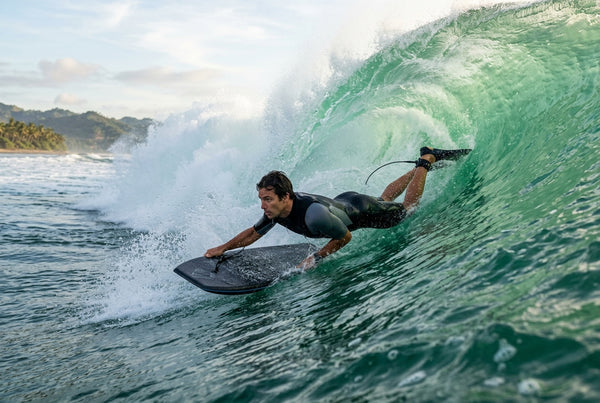
Bodyboarding moves
From the bottom turn to the backflip: classic and advanced manoeuvres, their technique, their prerequisites and the order to learn them in.
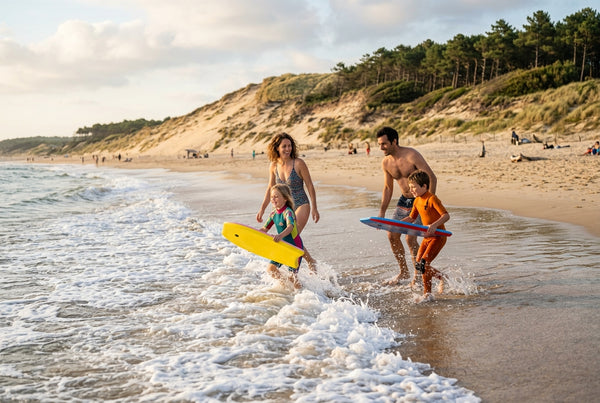
Bodyboarding for kids
Size by age and weight, foam or PE core, leash, fins and safety to choose a child's board.
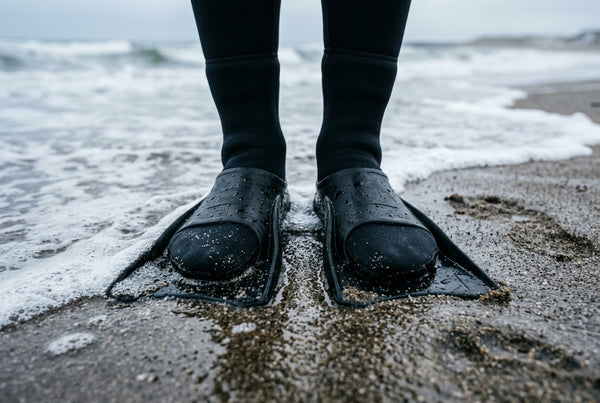
Bodyboarding in winter
4/3 or 5/4 wetsuit, boots, gloves, hood, board and cold-water wax, session routine: ride all year round.
Ready for your first session?
The bodyboard pack brings together a board, fins and leash in your size. Unsure about your build or shoe size: drop by the showroom in Hossegor or write to us, we will have you kitted out in ten minutes.
See the beginner bodyboard pack