

Before focusing on waves or maneuvers, it is important to understand what bodyboarding truly involves. Although it looks simple, bodyboarding requires awareness, timing, and the ability to read the ocean. These elements play a major role in early progression.
The importance of body position on the board
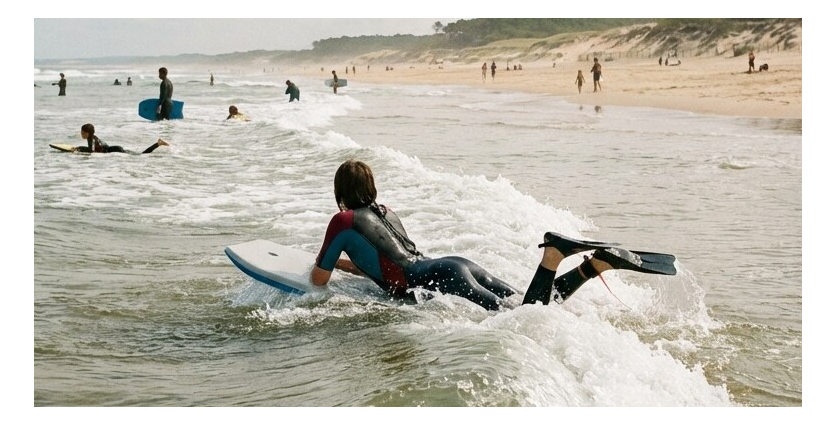
Body position is one of the first skills a beginner must develop. Incorrect positioning can make it difficult to catch waves or maintain control. The rider should lie centered on the board, with hips slightly raised and eyes looking forward. Arms help guide direction and balance, while the legs provide propulsion and stability.
Learning to feel how the board reacts under the body takes time. Relaxation and proper posture significantly improve glide and control. This connection between the rider and the board develops naturally through regular practice.
Choosing the right environment to start
The choice of location plays a crucial role when learning bodyboarding. Some conditions can make the experience frustrating or unsafe, while others are ideal for building confidence and skill.
Finding beginner-friendly waves
Soft, slow-breaking waves are best suited for beginners. Sandy beach breaks with gentle slopes usually offer safer and more forgiving conditions. Powerful, hollow waves should be avoided early on, as they require advanced control and experience.
Taking time to observe the beach before entering the water helps identify where waves break more smoothly. This habit allows beginners to select better takeoff zones and avoid unnecessary risks.
Essential equipment for beginner bodyboarders
Having suitable equipment makes learning easier and more enjoyable. While bodyboarding remains a simple sport in terms of gear, certain items are essential for comfort and safety.
The board and basic accessories
A beginner bodyboarder should choose a board suited to their height and weight. A board that is too small or too stiff can limit wave-catching ability and reduce stability. Fins are also highly recommended, as they provide speed, control, and better positioning in the lineup.
A leash is another important accessory. It prevents losing the board after a wipeout and reduces the risk of collisions. Even in small conditions, using a leash helps maintain a safer and more controlled session.
Common mistakes made by beginners
Many beginners encounter similar difficulties when learning bodyboarding. Recognizing these mistakes early can speed up progression and prevent unnecessary frustration.
Focusing only on the wave
Beginners often concentrate solely on catching the wave, forgetting about positioning, speed, and balance. A successful takeoff depends on being in the right spot and moving at the right pace, not just timing. Learning where to place yourself in the water is just as important as paddling at the right moment.
Reflecting on each attempt helps identify what went wrong and what worked. This awareness gradually improves consistency and confidence.
How to progress effectively in bodyboarding
Progression in bodyboarding is rarely linear. Plateaus and slow periods are common, especially at the beginning. Consistency and patience are key elements for long-term improvement.
Building a regular practice routine
Short but frequent sessions are often more beneficial than occasional long ones. Repetition allows the body to memorize movements and reactions. Over time, wave reading becomes more intuitive, and decision-making improves.
Accepting that not every session will be productive helps maintain motivation. Each time in the water contributes to experience, even when conditions are not ideal.
The importance of safety for beginners
Safety should always remain a priority, particularly for those new to bodyboarding. Knowing personal limits and understanding when to leave the water are essential skills.
Developing responsible behavior in the water
Respecting other water users, staying aware of surroundings, and recognizing signs of fatigue are fundamental habits. Bodyboarding can be physically demanding, and exhaustion increases the risk of injury or accidents.
By adopting a gradual and thoughtful approach, bodyboarding becomes a sustainable and rewarding activity that can be enjoyed over many years.
Conclusion
Starting bodyboarding is an exciting journey that requires patience, observation, and regular practice. By learning the fundamentals, choosing suitable conditions, and respecting personal limits, beginners can build confidence and enjoy steady progression. This beginner’s guide to bodyboarding provides a solid foundation for developing a safe, enjoyable, and lasting connection with the ocean.